Challenges & Objectives
Project Overview
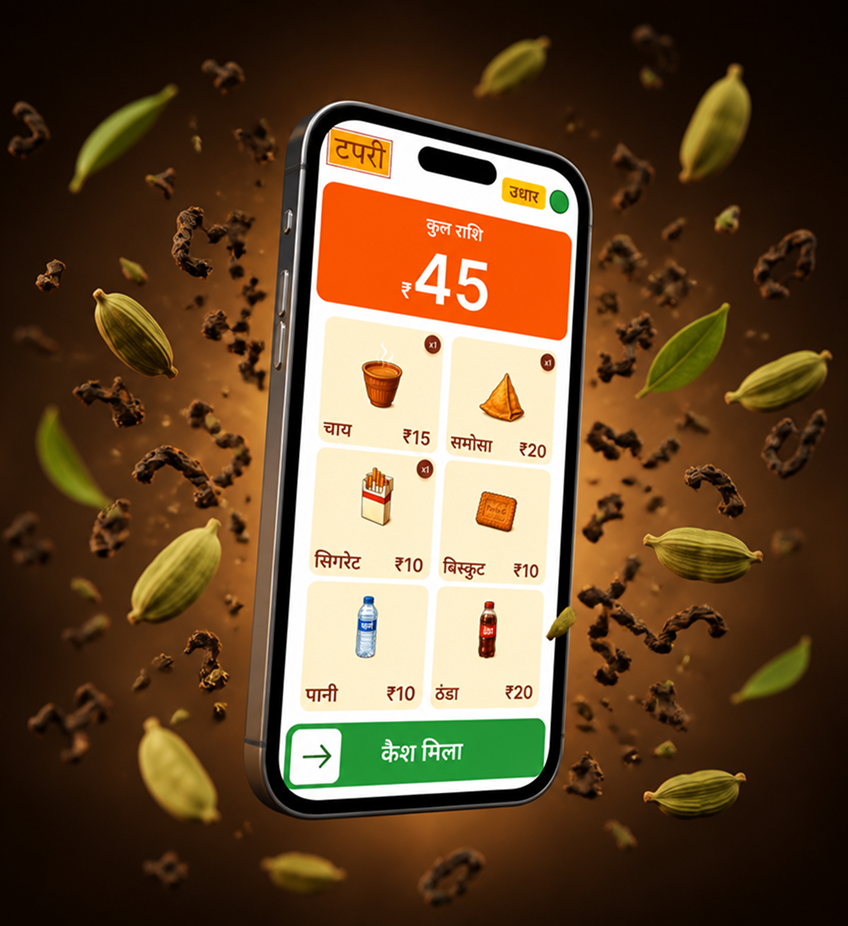
Current merchant apps fail street vendors. They require too much reading, too many clicks, and assume the user has time to type on a tiny keyboard. Project Tapri is a vernacular-first Point-of-Sale (POS) and micro-credit app designed specifically for the local chaiwala. My goal was simple: replace reading with visual muscle memory, and typing with voice, making transactions effortless even during peak rush hours.
Challenges
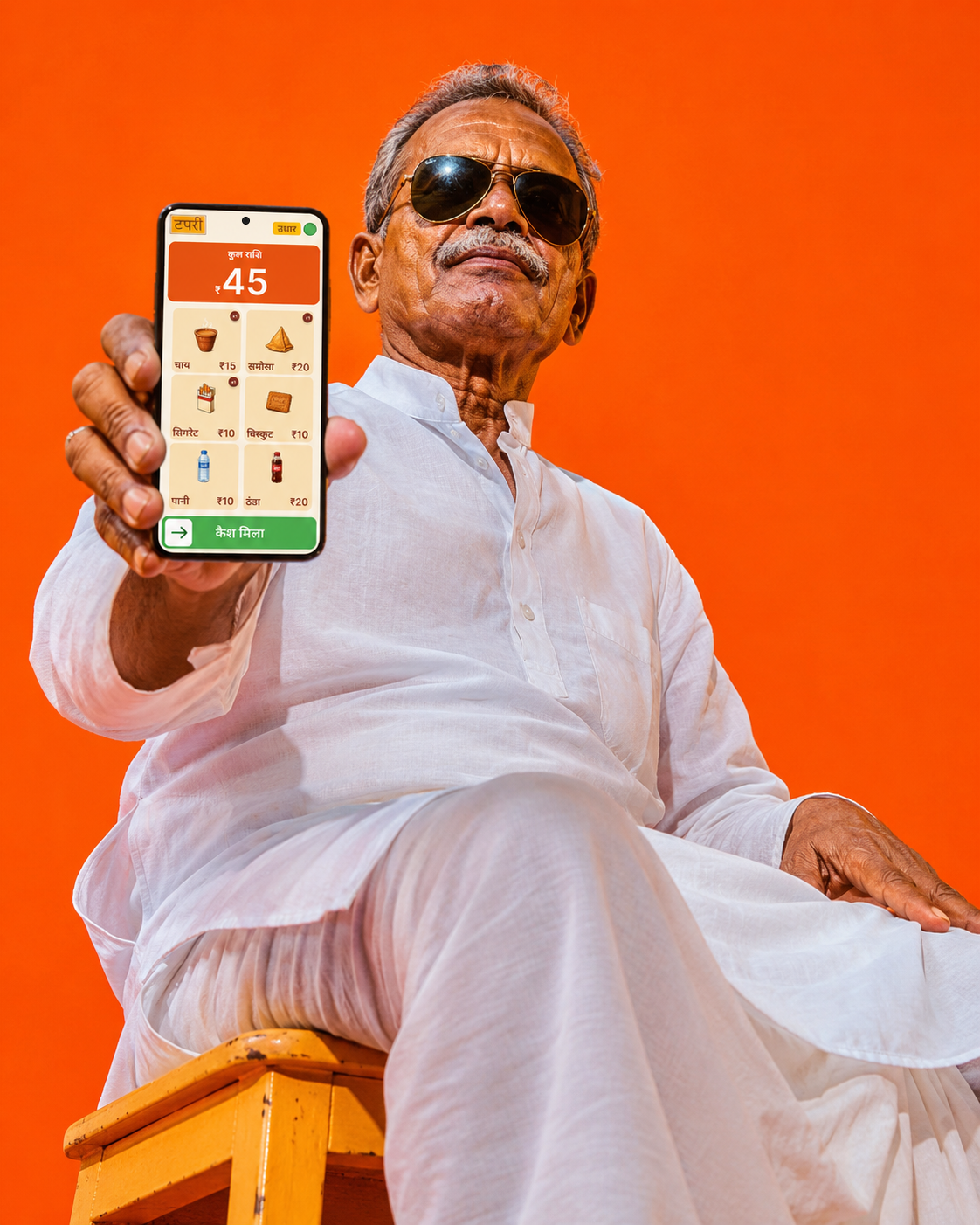
The Environment: Vendors operate in extreme heat and direct Indian sunlight, which makes standard “dark mode” or text-heavy interfaces completely invisible.
The Speed: A street vendor doesn’t have 8 seconds to log a ₹15 sale. It needs to happen in under a second without them having to look down.
The Udhaar (Credit) Reality: The local micro-economy runs on trust. But tracking who owes what in a sterile, text-heavy spreadsheet is stressful and creates friction for users with lower literacy.
The Solution
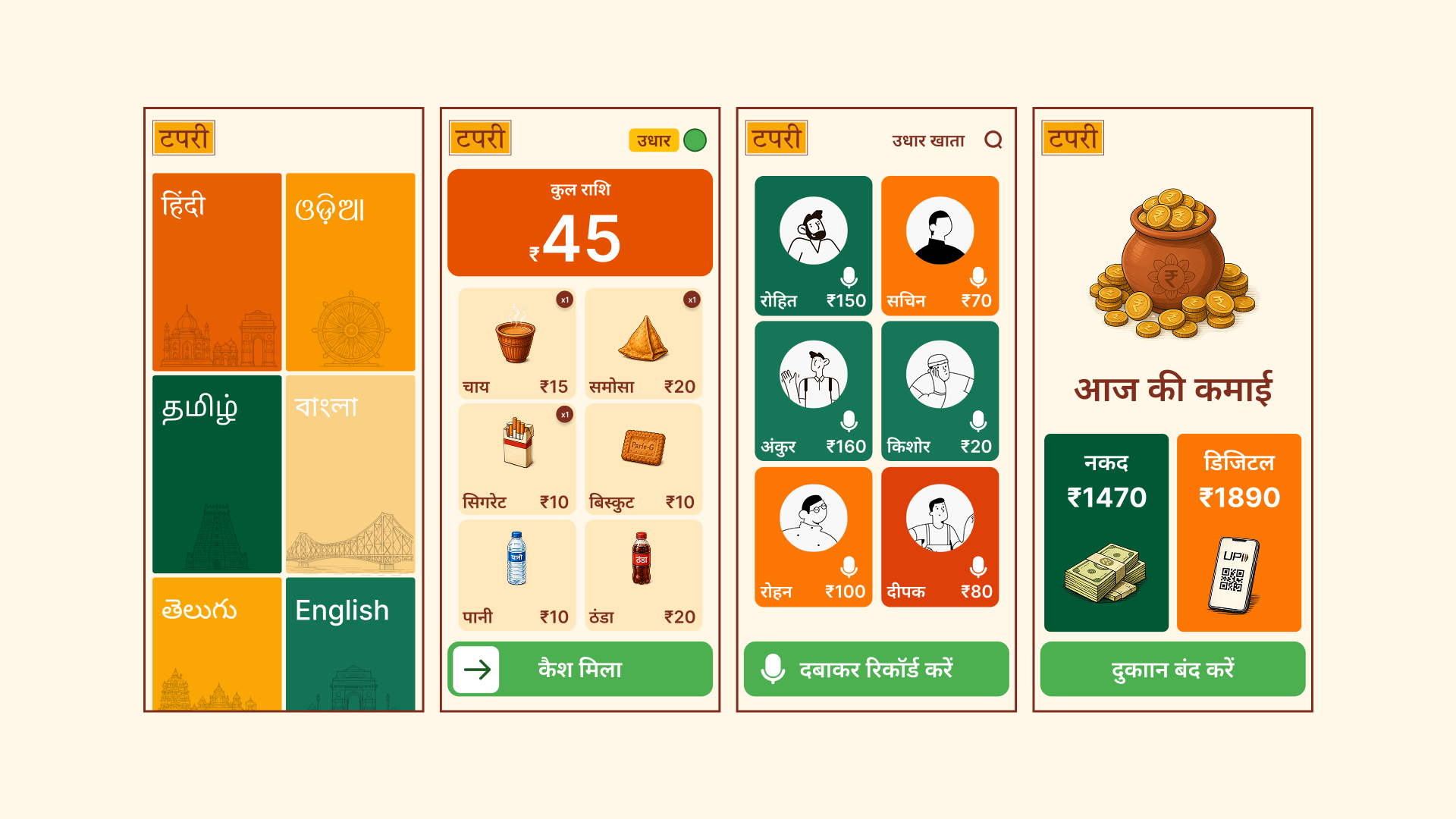
Killing the Keyboard: I removed the traditional numpad. The POS relies entirely on massive, color-coded item tiles so vendors can blindly tap orders using muscle memory.
Voice-First Ledgers: Instead of typing out names, the “Udhaar” screen uses visual avatars for regular customers paired with a voice-memo button. The vendor just holds it and says, “Rahul, one samosa.”
Designing for Dignity: I wanted closing the shop to feel like a victory. The end-of-day settlement visualizes earnings as a digital ‘Gullak’ (clay coin jar), celebrating their hard work instead of just showing a dry accounting total.
Final Outcome
Tapri isn’t about making a screen look pretty; it’s about respecting the user’s reality. By focusing on extreme speed, cultural familiarity, and zero-friction interactions, I designed a system that actually works on the street, not just on a Figma canvas. It proves that the informal economy doesn’t just need basic tools – it deserves world-class, empathetic design.